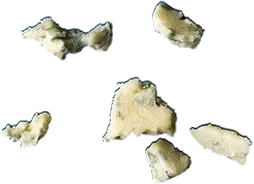

Approximately 15 litres for a whole wheel, that’s like a litre per 100g… we could say cheese is the original natural energy snack!
Yes, 40%+ comes from Beechmount Farm, on which the cheese-rooms are located, the rest from the local area, coming directly from farm to the cheese-dairy.
From two Irish milk producers, both who are small scale and family owned and managed.
Yes, it’s all natural but it will taste saltier, so you may prefer to blend with butter and use as a burger topper, or pop into a pot of soup, for a richer flavour. If you have a larger piece, we recommend cutting a triangle which includes rind and interior.
23 People - We make cheese the slow way, the traditional way. It’s more hands on than most cheese you find in your local store. Piercing is done slowly, one cheese at a time, salting, turning, cutting, tasting. It often surprises people what a hands-on make it is.
You can take cheese tasting classes to understand the different types of cheese and their taste characteristics ( https://academyofcheese.org/study-cheese/associate/ ) But the best way is practice, is patience, is the ability to see the subtle changes, the seasonality and the connection between all these factors.
Breed of cow and seasonality. Our Classic Cashel Blue is made from the milk of Friesan/Jersey cross cows, whereas our Organic Cashel Blue is made from the milk of a cross of Rotbund, Friesan, Montbeliard and Jersey cows.
Always store your Cashel Blue or Crozier Blue in the fridge, 2-5C is perfect.
Our blues are best eaten within 7-10 days of first opening the pack - after this they will become strong.
And those forgotten about bits in the fridge that have turned a bit strong? They are ideal added to a soup, risotto, mac n’ cheese, or make a quick dip for your wings with crème fraiche, an end/rind of Cashel Blue and a squeeze of lemon juice.
Cottage cheese could be on the shelf within a few days, Camembert a few weeks and our blues a few months.
Toma No. 5 leans into traditional cheese-making and is made with animal rennet. Animal rennet results in the breakdown of the fats and enzymes in the milk in a very different manner, resulting in a richer creamier texture. It is 100% natural. At Cashel Farmhouse Cheesemakers we are delighted to support this traditional craft, in our new cheese.
Yes! We carried out extensive testing in 2025 and are delighted to confirm that Cashel Blue can be eaten by people who are sensitive to Lactose. Did you know the lactose, i.e. the natural sugars in the milk, are fermented out over time.
It has just the right weight to help that amazing creaminess develop in time, to help the proteins and fats in the curds change from a crumbly to a smooth consistency and for the blueness to develop in such a way that it is plays a supporting but not aggressive flavour role.




Can be enjoyed by those sensitive to Lactose - Did you know the lactose, i.e the natural sugars in the milk, are fermented out over time.
Ingredients: Pasteurised cow’s MILK, salt, rennet, starter cultures and Penicillum Roquefortii.
Allergy Advice: Contains milk
Cashel Blue®
Country of Origin: Ireland
Established: 1984
Milk Type: Whole Cow’s Milk
Pasteurised: Yes
Rennet: Vegetarian
Style: Semi-Soft, Blue
Nutritional Information:
Typical values per 100g:
Energy - 1444kJ / 348kcal
Fat – Total Fat: 28.8g
Saturated Fat: 18.4g
Monounsaturated Fat:7.2g
Polyunsaturated Fat:0.8g
Trans Fats: 1.0g
Carbohydrate (by difference): 0.9g
Sugars: 0.2g
Protein: 20.4g
Salt: 2.0g